I'm writing this from Puerto Vallarta, where my Capital One debit card got rejected at ATMs I tried in Zona Romántica. Last year, same trip, zero problems. Nothing changed on my end. Same card, same account, same PIN. What changed was Capital One, and if your card is getting declined here right now, this is almost certainly why.
My Capital One Card Worked Here Last Year, So Why Is It Getting Rejected Now?
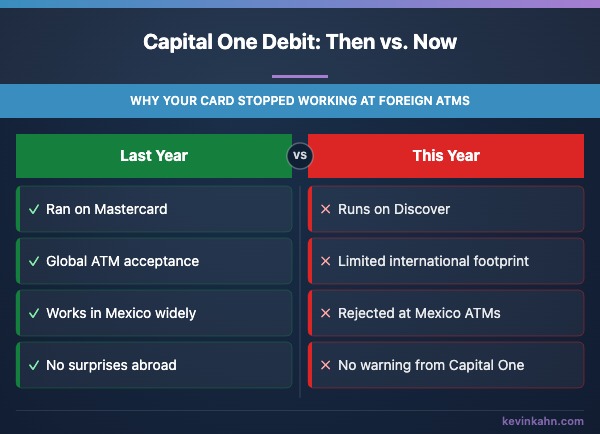
Last year, Capital One debit cards ran on the Mastercard network. Mastercard is accepted at ATMs all over Mexico. Widely. You could walk up to virtually any bank machine in Puerto Vallarta and pull out pesos without a second thought.
This year is different. Capital One moved its debit cards to the Discover network. And if you're standing in Zona Romántica right now wondering why every ATM screen is telling you your card was rejected, that's the reason. Not your balance. Not a fraud hold. The network changed and the ATMs here simply don't recognize it.
I tried multiple machines across the neighborhood. Declined, declined, declined. It took me a while to even figure out what was happening because nothing in my account looked wrong. The card wasn't blocked. Capital One's app showed no issues. The problem was invisible until I started doing some digging.
The frustrating part is that this isn't a you problem. Your card is fine. Your account is fine. You just happen to be holding a card that runs on a network with a much smaller international footprint than the one it replaced.
The card didn't stop working. The network underneath it changed, and that network isn't as welcome at foreign ATMs as the old one was.
Capital One Did Send a Notice. But Nobody Realized What It Would Mean at a Foreign ATM.
Capital One did technically communicate this change. There was probably an email, maybe something in the app. Most people either didn't see it, skimmed past it, or read it and thought, "okay, new card design, whatever."
Here's what the notice didn't spell out clearly: Discover's international ATM network is significantly smaller than Mastercard's. This isn't a knock on Discover for domestic use. For everyday purchases in the US, you'll barely notice the difference. But outside the US, especially in Mexico, the gap is real and it matters.
Mastercard and Visa are the two dominant networks at ATMs around the world. Most bank machines abroad display those logos and are built to process those cards. Discover has partnerships and its PULSE and Diners Club affiliations do give it some international reach, but it's not the same level of coverage. Not even close.
When Capital One framed this as a routine network switch, most customers had no reason to think "this might mean my card won't work at ATMs in Mexico." Why would they? The card still looked like a debit card. It still worked fine at Walmart and the grocery store back home. The real-world consequence only showed up when you landed at PVR and tried to get cash.
That's the gap between what was communicated and what actually mattered. Most people I talk to had no idea this was even a possibility until they were already stuck.
Which ATMs in Puerto Vallarta Actually Work with a Capital One Debit Card?
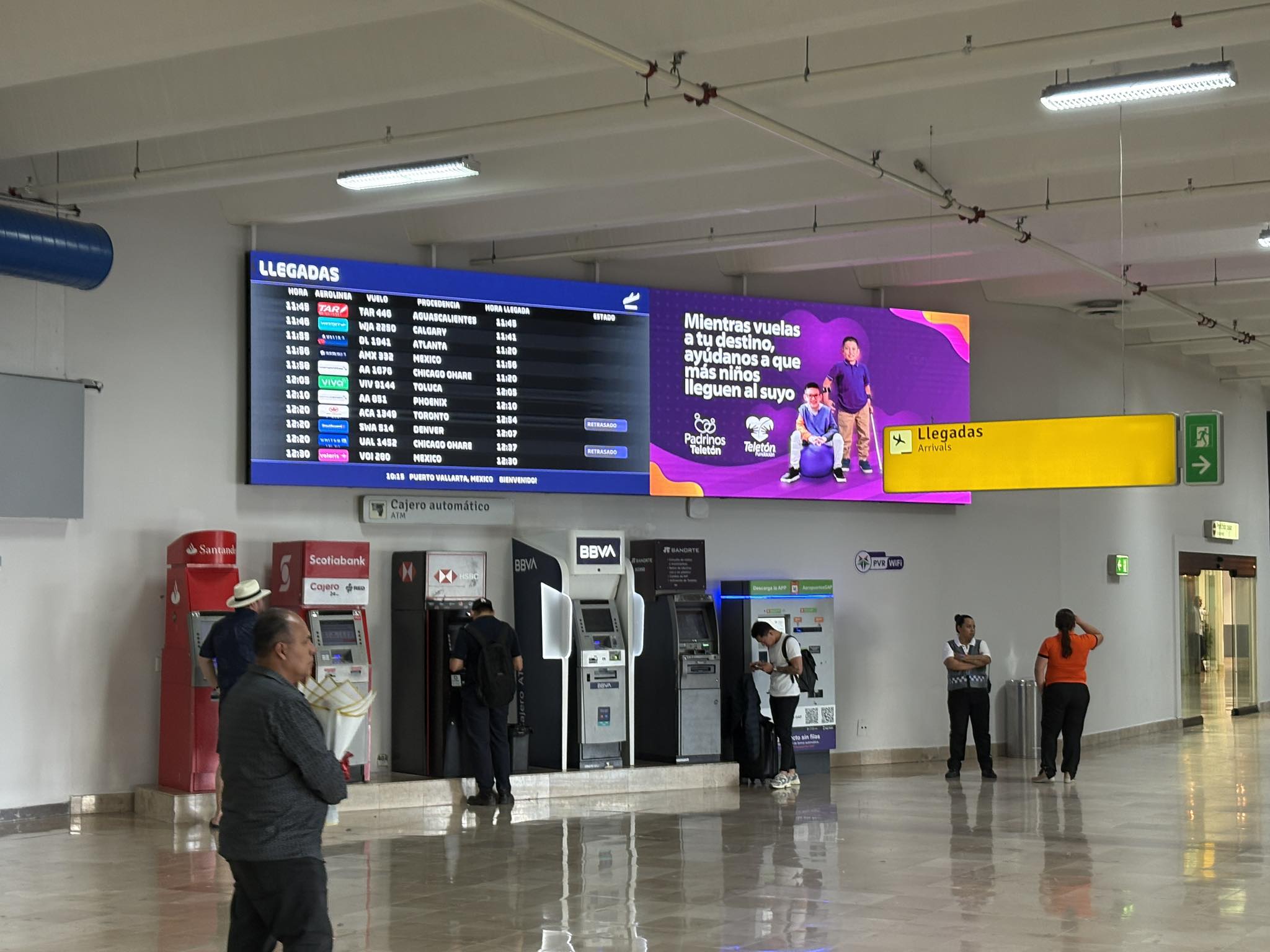
Before you leave the airport, stop at the HSBC ATM near the taxi and transportation area on the arrivals level. It works with the Capital One Discover debit card. Stock up on pesos there before you head to Zona Romantica because your options once you're there are basically zero.
That's the most reliable confirmed option I can give you from personal experience. If you're staying in the hotel zone or near the Malecón, the airport is a bit of a haul, but it's worth knowing it's there when nothing else is cooperating.
Beyond that specific machine, here's how to think about finding compatible ATMs:
Always Decline the ATM Currency Conversion Offer. Here Is Why It Costs You More.
This is separate from the network problem, but it's something that came up every time I finally found an ATM that would process my card, so I want to make sure you know about it.
When an ATM abroad asks if you want to complete your transaction in US dollars or in local currency, that's called dynamic currency conversion. It sounds convenient. You can see exactly what you're paying in dollars before you confirm. But that convenience has a price.
The exchange rate the ATM uses for that conversion is set by the ATM operator, not by your bank. It's padded. Sometimes significantly. You might be paying 5% to 8% more than the interbank rate your own bank would apply. The ATM operator captures that spread as profit.
Always choose to be charged in pesos. Let your own bank handle the conversion on the back end. Your bank's rate will almost always be better than what the ATM is offering you in that moment.
If an ATM asks whether you want to pay in dollars or pesos, always pick pesos. Every time. No exceptions.
This applies regardless of which card you're using. It applies in Mexico, Europe, Southeast Asia, anywhere. The ATM's conversion offer is never the better deal.
Is It Time to Switch Banks Before Your Next International Trip?
I'll be honest with you: this experience has me thinking seriously about switching banks before my next trip. Not because I'm angry at Capital One, the card works fine at home, but because a debit card that causes this much friction at foreign ATMs isn't really a travel card anymore.
If you're evaluating your options, here's what actually matters for a travel-friendly debit card:
Schwab, Wise, and Fidelity's cash management account all come up frequently in conversations about travel banking. I'm not recommending any of them specifically, do your own research and compare what's changed recently, but those are reasonable places to start.
I'm a web designer and developer based in Delaware, not a travel consultant. But I do think good information is worth sharing. If this helped you, pass it along to anyone heading to Puerto Vallarta. And if you ever need a website, that's actually my thing.